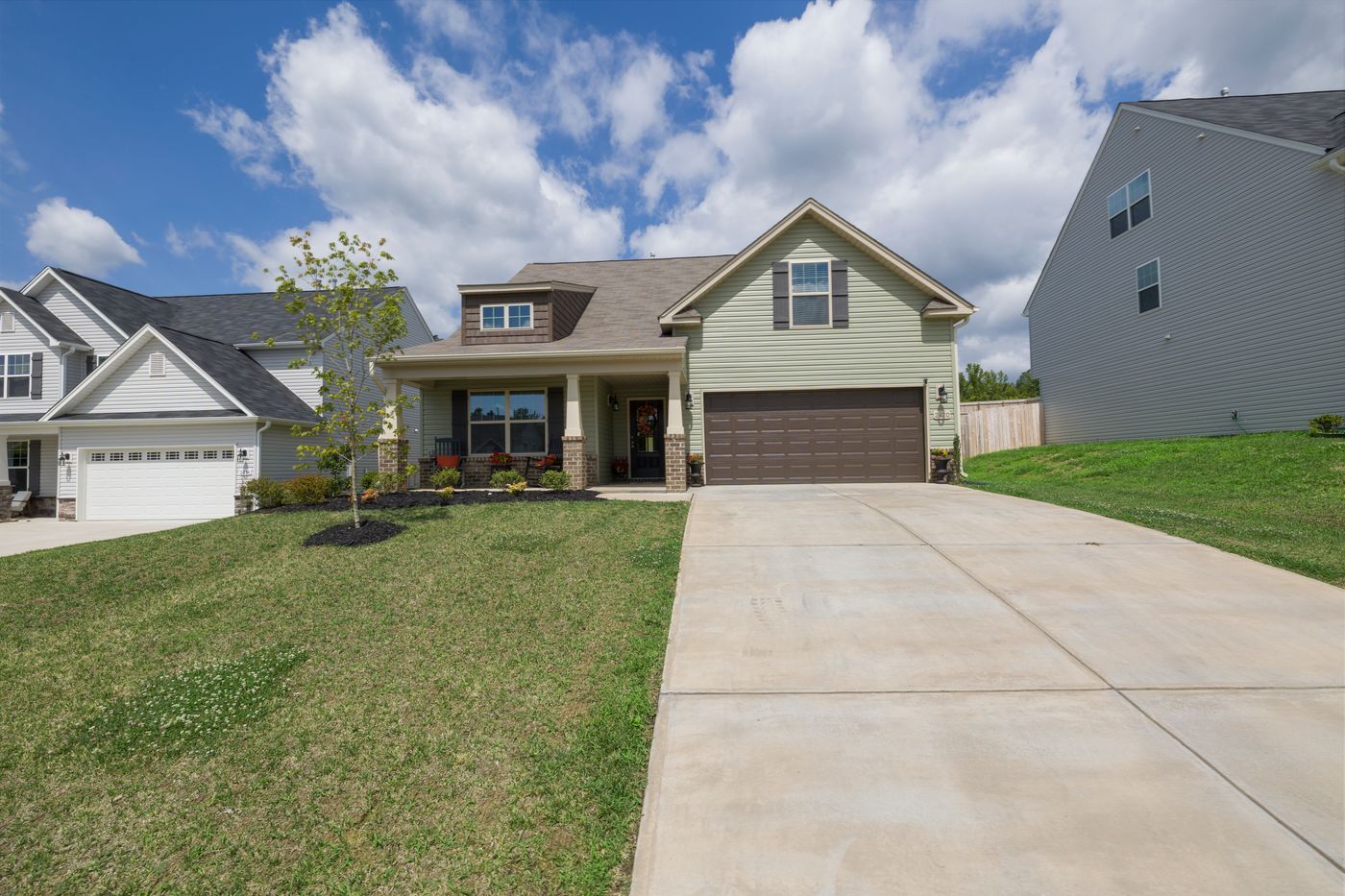
Quick answer: A custom home builder in Carlingford designs and builds a home to your specifications on your existing lot — not from a catalogue. Construction costs for a well-specified custom home in Carlingford start at $3,200–$4,500 per m² in 2026. A typical Carlingford knockdown-rebuild comes in at $2M–$3M all-in including land, design, and construction. Most of the suburb falls under City of Parramatta Council; the north-western strip is in The Hills Shire — and the two councils have very different DA timelines.
Neighbours are a big part of the Australian dream. A builder who shows up with a slab of plans that look exactly like the house next door is, in a technical sense, also delivering the dream. Just not yours.
[Right. Straight face now.] Here is what you actually need to know: what a custom home builder does in Carlingford, what it costs in 2026, which council you will be dealing with — and this one matters more than most people realise — and when a custom build is the wrong move entirely.
- What a custom home builder actually does
- Carlingford’s building landscape in 2026
- The three-council split — and why it matters
- Knockdown rebuild vs renovation
- What a custom build costs in Carlingford
- DA vs CDC: which path applies to your site
- What the timeline actually looks like
- When not to hire a custom builder
- Six questions to ask before you sign
- FAQ
What a Custom Home Builder Actually Does in Carlingford
“Custom” gets applied broadly in this industry. It has come to mean anything from a project home with a different facade option to a fully designed residence built without a catalogue in sight. Worth being precise.
A genuine custom home builder in Carlingford manages the full process: engaging a licensed architect or building designer, coordinating structural engineers, energy consultants, and surveyors, obtaining council approvals, and delivering the construction under a HIA or MBA contract. You get a home designed for your specific lot, your brief, and how you actually live — not a plan adjusted at the margins.
The alternative — a volume or project builder — works from pre-approved plan sets modified for hundreds of previous clients. Faster to approve. Less expensive per square metre. The right choice for some sites and some clients.
For a Carlingford block with an irregular boundary, an easement, a north-facing garden worth protecting, or a brief that has nothing to do with the standard open-plan catalogue, the volume builder path is a poor fit. The design simply does not have the flexibility.
Carlingford’s Building Landscape in 2026
Carlingford sits 22km north-west of the Sydney CBD, on the edge of what residents call the Hills District. The suburb’s residential character is predominantly 1970s and 1980s brick construction on generous blocks — typically 700–900m² — a product of the era when land was allocated differently.
That housing stock is now ageing. What was a functional four-bedroom brick veneer in 1982 is, in 2026, a home with original wiring, asbestos-containing materials in wet areas and eaves, and a floor plan designed for different expectations about how people use a house. The land is good. The building on it, for many owners, is not.
This is driving sustained knockdown-rebuild activity across the suburb. Carlingford’s school catchment — which includes Carlingford High School and James Ruse Agricultural High School — anchors significant demand from families who want to be in this postcode and stay there. They are not renovating 1982. They are building 2026.
The Parramatta Light Rail (Stage 1), connecting Westmead through Parramatta, has improved connectivity to Carlingford’s inner-western edge and brought a broader buyer pool to a suburb that was already performing well on fundamentals.
The Three-Council Split — and Why It Matters
Photo via Pexels
This is the thing most guides about Carlingford skip.
The suburb is not in one council area. The majority of Carlingford falls within City of Parramatta Council. The north-western portion of the suburb sits in The Hills Shire Council. A small section of the north-eastern corner falls within Hornsby Shire.
Which council covers your lot determines:
- Which Local Environmental Plan (LEP) and Development Control Plan (DCP) governs your build
- Whether your site is zoned R2 Low Density or R3 Medium Density Residential
- Minimum lot sizes for dual occupancy or subdivision
- DA fees and assessment timelines
- Whether Complying Development is available for your intended works
City of Parramatta and The Hills Shire have different DCPs with different floor space ratios, setback requirements, and height limits. A design that complies easily on a Parramatta-side lot may require reworking on a Hills-side lot two streets away.
Before you brief a designer, confirm your property’s LGA on the NSW Planning Portal. It takes two minutes. Skipping this step has caused builders and clients significant pain.
Knockdown Rebuild vs Renovation
On a Carlingford block with a 1970s or 1980s home, this is the first real question — and the answer is not always obvious from a cost-per-m² spreadsheet.
When knockdown rebuild makes more sense:
The original home contains fibrous cement sheeting or asbestos-containing materials in roof lining, wet areas, or eaves. Removal and disposal costs add $15,000–$45,000 to any renovation, disrupting the build sequence for everything else. On a Carlingford home of this era, assume it until a licensed assessor proves otherwise.
The floor plan is fundamentally wrong for the brief. Renovating to a different layout — particularly moving kitchens, bathrooms, or load-bearing walls — approaches or exceeds the cost of a knockdown without delivering the result of a purpose-designed new home.
The original structure has been extended or altered without complying building approval. In these cases, certifying new works can require retrospective compliance assessment of the existing structure. This is expensive and slow.
When renovation makes more sense:
The existing structure has genuine heritage significance, or the brief is confined to extensions and additions on a structurally sound, asbestos-free home. A rear extension on a sound Carlingford home can be completed for $300,000–$600,000 depending on scope and specification — significantly less than a full rebuild.
What a Custom Build Costs in Carlingford
Photo via Pexels
Construction costs for a mid-to-high specification custom home in Carlingford in 2026:
| Specification | Cost per m² (construction only) |
|---|---|
| Standard mid-spec | $2,800 – $3,500 |
| Well-specified custom | $3,200 – $4,500 |
| Architectural / high-spec | $4,500 – $6,500+ |
A 250m² home at mid-to-high specification runs $800,000–$1.13M in construction costs before anything else is added.
What gets added:
- Demolition and site clearing: $20,000–$50,000
- Asbestos removal (if applicable): $15,000–$45,000
- Architect or building designer fees: $60,000–$120,000
- Structural engineering, energy assessments, surveys: $15,000–$25,000
- Council contributions (Section 7.11 or Hills equivalent): $20,000–$60,000
- Landscaping, driveways, fencing: $40,000–$100,000
- Furnishings and the styling consultation you’ll be talked into
A typical Carlingford knockdown-rebuild on a well-located 700m² block — land included — comes out at $2M–$3M. That figure surprises people who started with a cost-per-m² estimate on a napkin. It should not surprise you.
DA vs CDC: Which Path Applies to Your Site
Two approval paths exist for residential construction in NSW. Which one applies depends on the lot, the LGA, and what you plan to build.
Complying Development Certificate (CDC): Assessed by a private certifier against the Housing SEPP criteria — not by council. If your proposed design complies with all numerical standards (setbacks, height, floor space ratio, site coverage), a CDC can be issued in approximately 20 business days. Not all sites and designs qualify. An architect or certifier can assess eligibility before design begins.
Development Application (DA): Required when the site does not meet CDC criteria — irregular lots, corner sites, or designs that seek variation from planning controls. Council assesses the DA. Timelines differ materially between Carlingford’s three LGAs:
- City of Parramatta: 2–4 months for a standard residential DA
- The Hills Shire: 6–12 months for residential applications
- Hornsby Shire: typically 4–8 months
If your Carlingford lot is in The Hills Shire, assume 6 months for DA assessment as a baseline. Building your project programme around anything shorter is optimistic.
What the Timeline Actually Looks Like
Photo via Pexels
| Phase | Duration |
|---|---|
| Site assessment, town planning, feasibility | 4–8 weeks |
| Design and documentation | 3–5 months |
| DA assessment (City of Parramatta) | 2–4 months |
| DA assessment (The Hills Shire) | 6–12 months |
| Construction — single storey | 10–14 months |
| Construction — double storey | 12–16 months |
For most Carlingford knockdown-rebuilds in the Parramatta LGA, total elapsed time from first conversation with a builder to handover is 18–24 months. In The Hills Shire portion of the suburb, plan for 24–30 months.
These numbers assume no material objections to the DA, no significant variations during construction, and no supply chain delays. Treat each buffer as a real possibility rather than an edge case.
When Not to Hire a Custom Builder
This section is the one most guides skip. We are not most guides.
Do not engage a custom builder if your brief is a standard four-bedroom, two-bathroom home with an open-plan kitchen and living area, a double garage, and modest finishes. A volume or project builder will deliver this faster, with a clearer price, and with less ambiguity at every stage. The custom process adds cost and complexity that a standard brief does not justify.
Do not engage a custom builder if your budget is under $700,000 for construction. Below this threshold, the margins required to fund a fully custom process — dedicated project management, consultant coordination, bespoke procurement — compress to a point where something gives. Usually quality, or the relationship, or both.
Do not engage a custom builder if you want a fixed price on day one and no tolerance for scope changes. Custom builds are inherently iterative. The design evolves. Costs move. If this uncertainty is genuinely unworkable for you, the project home route is more honest about what you are buying.
Six Questions to Ask Before You Sign
Do this before the first phone call, not after you have had three good meetings and are emotionally attached to the renders.
- Are you licensed for residential construction in NSW? Verify the licence number on the NSW Fair Trading register. The licence should be current and in the company’s name — not an individual who left last year.
- Do you have current home warranty insurance for this project value? NSW requires home building compensation (HBC) insurance for residential contracts over $20,000. Ask for evidence before contracts are signed.
- Who manages the project day to day? Some custom builders have a dedicated site supervisor on your project. Others rotate supervision across multiple sites. This distinction affects quality, communication, and your sanity.
- Can I speak with three recent clients whose projects were comparable in scope and budget? The right builder says yes immediately. Any hesitation tells you something.
- What is your current programme capacity, and what is the realistic start date? A builder who is completely available right now has a reason for that. A builder with a 6-month wait usually does too.
- How do you handle variations? Every custom build has them. Ask for a copy of the variation clause in the proposed contract before you commit. Variations should be priced in writing before work proceeds — not reconciled at the end.
Six questions. Not unreasonable for a $2M+ commitment.
FAQ
How much does it cost to build a custom home in Carlingford?
A mid-to-high specification custom home in Carlingford costs $3,200–$4,500 per m² for construction in 2026. A 250m² home runs $800,000–$1.13M in build costs alone, before land, design fees, council contributions, and landscaping. All-in on a typical Carlingford knockdown-rebuild: $2M–$3M depending on land value and specification.
Which council covers Carlingford NSW?
Most of Carlingford falls within City of Parramatta Council. The north-western section of the suburb is in The Hills Shire Council, and a small north-eastern corner sits within Hornsby Shire. Which council you’re dealing with affects planning controls, DA fees, and approval timelines — confirm your lot’s LGA on the NSW Planning Portal before you start design.
How long does a DA take in Carlingford?
City of Parramatta Council typically processes standard residential DAs in 2–4 months. The Hills Shire Council runs 6–12 months for residential applications. If your site qualifies for Complying Development (CDC), approval can be issued within 20 business days. Your builder or architect can assess which path applies to your specific lot.
Can I build a duplex on my Carlingford block?
Many Carlingford lots — particularly those on 700m²+ in R2 or R3 zones — are suitable for dual occupancy or duplex development. Under the Parramatta LEP, R2 Low Density Residential land permits attached dual occupancy. Minimum lot size and frontage requirements vary, so a town planning check before committing to a builder is essential. See our guide to duplex development in Sydney for more detail.
Is a knockdown rebuild worth it in Carlingford?
On a well-located 700–900m² Carlingford block, a knockdown rebuild typically stacks up better than renovating a 1970s or 1980s home. The reason: original homes often require asbestos removal, full rewiring, re-plumbing, and structural work that quickly approaches rebuild costs — without the result of a purpose-designed new home.
What does a custom home builder do differently from a project builder?
A custom home builder constructs a home designed specifically for your site, your brief, and your lifestyle — not a plan from a catalogue adjusted at the margins. Custom builders manage the full process: engaging an architect or building designer, coordinating consultants, managing the DA, procuring trades, and delivering construction. The difference shows up in design response to your specific block, finishes, and quality control. See our guide to custom home builders on the North Shore for a broader comparison across Sydney’s premium suburbs.